1. Introduction
In software applications, not all objects are lightweight.
Some may require heavy initialization, complex configuration, or expensive resources (like database queries or file I/O).
For example:
Loading a large image into memory.
Preparing a complex configuration object.
Building a character in a game with multiple attributes.
👉 Creating such objects repeatedly using new can become slow and resource-hungry.
This is where the Prototype Pattern comes in.
Definition:
Prototype Pattern is a creational design pattern that allows creating new objects by cloning existing ones, rather than building them from scratch.
Key idea: Instead of saying new Object(), you say existingObject.clone().
This pattern provides two big advantages:
Performance → cloning is often faster than re-initializing.
Flexibility → you can make small modifications to clones without changing the original.
2. Real-World Analogy
Sometimes design patterns sound abstract, but Prototype is actually something we use in everyday life. Think about it this way:
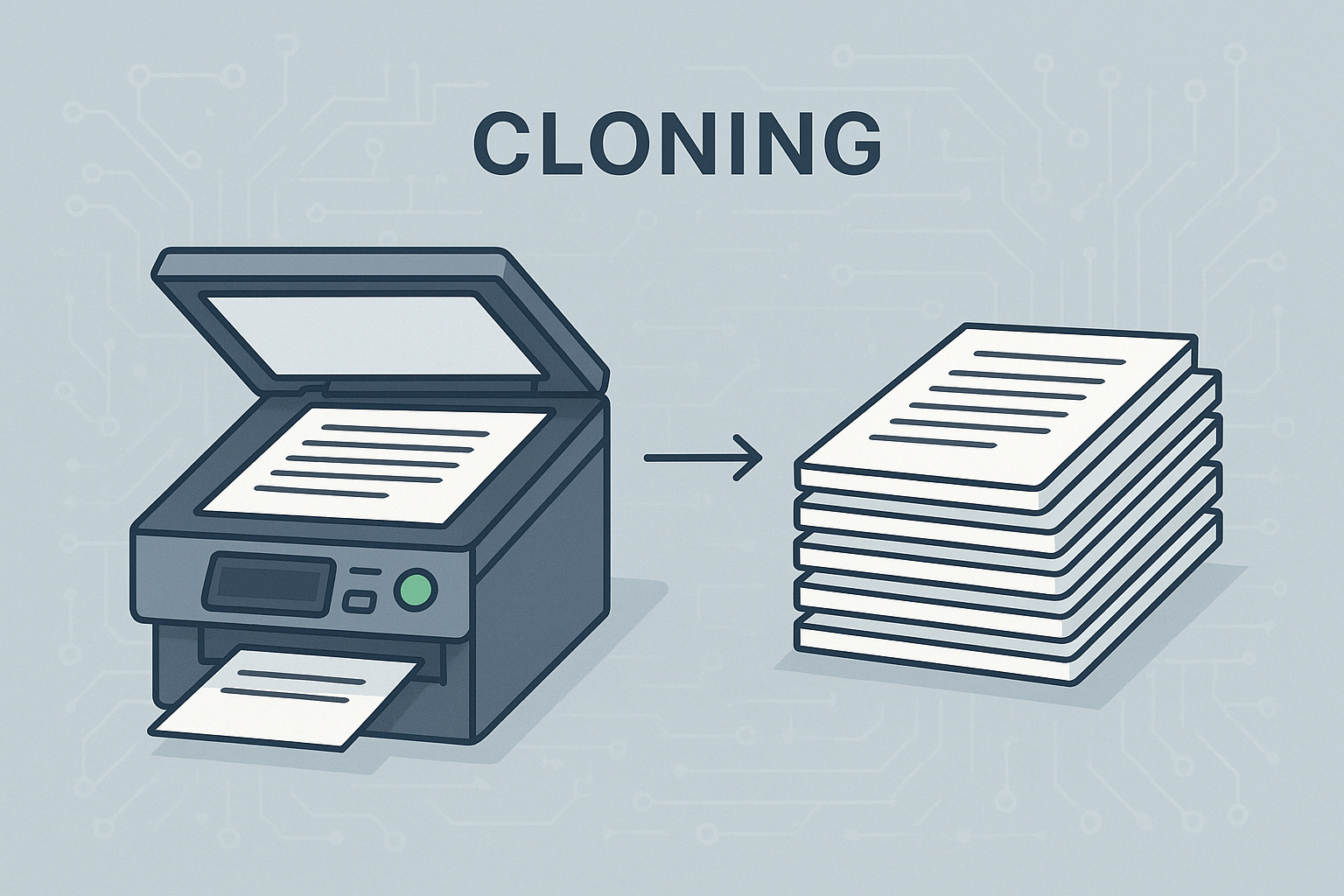
Photocopying a document → Instead of rewriting an entire 10-page report, you just make a copy and reuse it.
Duplicating an ID card → Once the template is set, you can clone the card and only change name/photo.
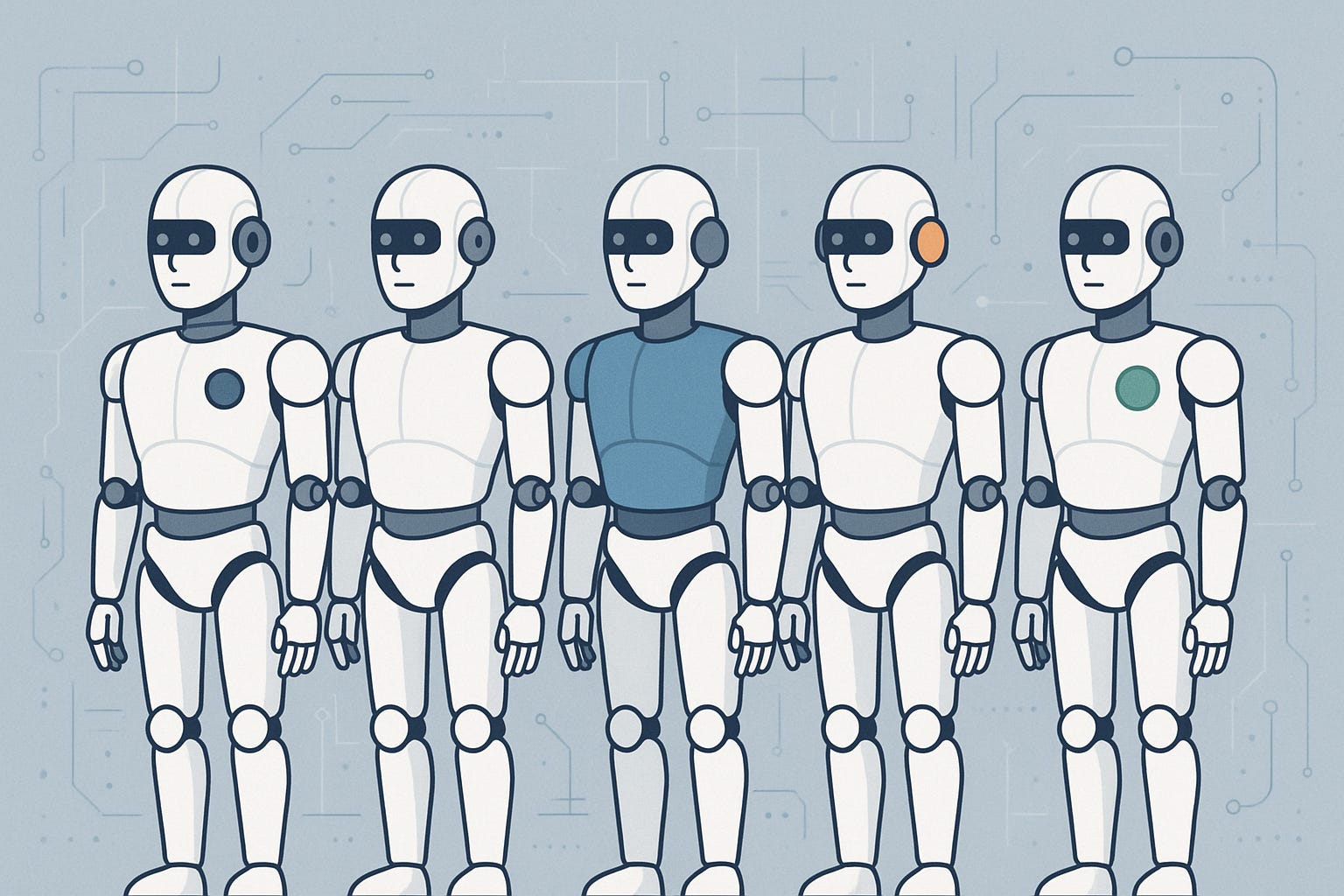
Game characters → In many games, you have a default warrior/mage/archer. Rather than building each from scratch, you clone the base character and adjust weapons, armor, or abilities.
👉 In all these cases, you’re reusing a base object and making small tweaks, instead of starting from zero. That’s exactly what the Prototype Pattern does in software development.
3. When to Use Prototype Pattern
The Prototype Pattern is not for every situation — it’s most useful when object creation is costly or when you need many similar copies with minor differences.
Use it when:
Creating objects from scratch is expensive (e.g., loading a huge object graph, database reads, or file parsing).
You need to create multiple similar objects with small variations.
You want to decouple clients from object creation logic.
You’d otherwise need to create many subclasses just for different configurations.
Examples in real-world applications:
Graphics software → duplicating shapes (copy-paste in tools like Photoshop or Figma).
Gaming → cloning characters, weapons, or levels.
Enterprise apps → reusing preconfigured settings objects across modules.
4. Structure of Prototype Pattern
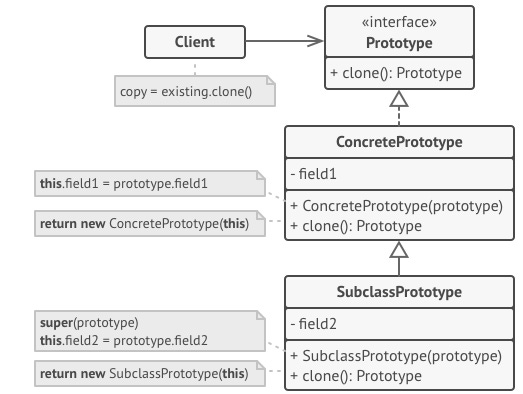
Like all design patterns, Prototype has a defined structure. It focuses on the cloning contract and the objects that implement it.
Participants:
Prototype (Interface/Abstract Class)
Declares the
clone()method.Ensures all implementing classes can be duplicated.
ConcretePrototype
Implements the cloning logic.
Can decide whether to do a shallow copy or a deep copy.
Client
Instead of using
new, it requests a copy by callingclone()on the prototype object.
Flow Explanation:
Client has a reference to a Prototype object.
Instead of creating a new instance directly, it calls
clone()on the prototype.The Prototype returns a new object copy (shallow or deep).
Client modifies the clone if needed, without touching the original.
5. Java Implementation
Goal: show a clear
Prototypecontract and at least two practical cloning approaches, then demonstrate why shallow copy can be a problem and how to fix it with deep copies.
5.1. Prototype contract (interface)
You can define a simple Prototype interface to make intent explicit:
public interface Prototype<T> {
    T clonePrototype();
}
Concrete classes will implement this to provide a typed clone method.
5.2. Approach A — Shallow copy using Cloneable and Object.clone()
When to use: quick, minimal-clone cases; when objects hold only primitive/immutable fields.
// A nested reference type
class Address {
    String city;

    Address(String city) {
        this.city = city;
    }

    @Override
    public String toString() {
        return “Address{” + “city=’” + city + ‘\’‘ + ‘}’;
    }
}

// Concrete prototype using Object.clone() (shallow)
class Employee implements Prototype<Employee>, Cloneable {
    String name;
    Address address;

    Employee(String name, Address address) {
        this.name = name;
        this.address = address;
    }

    // shallow copy
    @Override
    public Employee clonePrototype() {
        try {
            return (Employee) super.clone();
        } catch (CloneNotSupportedException e) {
            throw new RuntimeException(e); // shouldn’t happen because we implement Cloneable
        }
    }

    @Override
    public String toString() {
        return “Employee{” + “name=’” + name + ‘\’‘ + “, address=” + address + ‘}’;
    }
}
Demo that shows the problem (shallow copy):
public class ShallowDemo {
    public static void main(String[] args) {
        Employee emp1 = new Employee(”John”, new Address(”New York”));
        Employee emp2 = emp1.clonePrototype(); // shallow clone

        emp2.name = “Alice”;                 // only emp2.name changes
        emp2.address.city = “London”;        // BOTH emp1.address and emp2.address change (shared reference)

        System.out.println(emp1); // Employee{name=’John’, address=Address{city=’London’}}
        System.out.println(emp2); // Employee{name=’Alice’, address=Address{city=’London’}}
    }
}
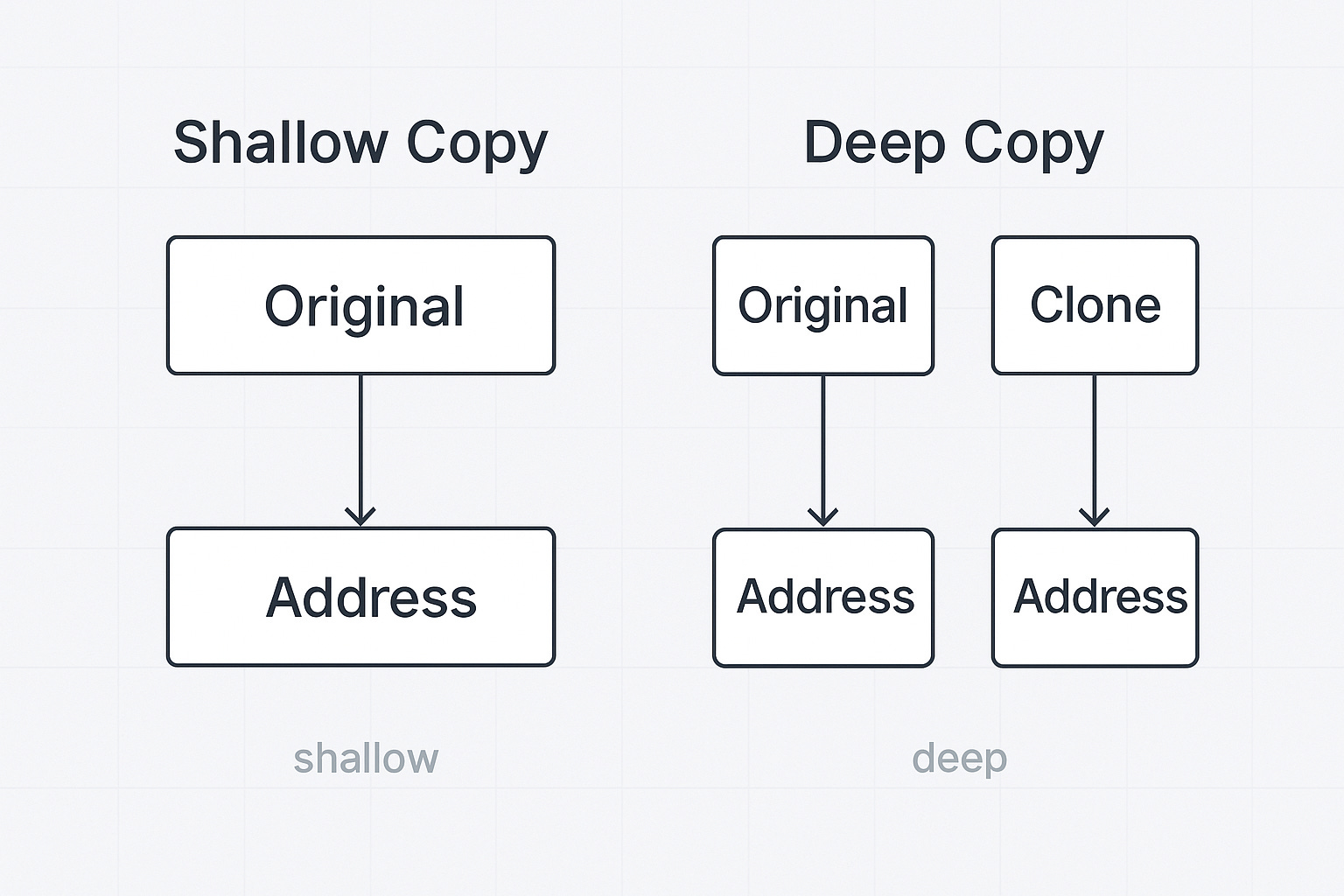
Explanation: super.clone() does field-by-field copy; object references are copied, not cloned — nested objects remain shared.
5.3. Approach B — Deep copy (copy constructors / manual clone)
When to use: when nested mutable objects must not be shared. This is the most explicit and controllable approach.
class AddressDeep {
    String city;

    AddressDeep(String city) {
        this.city = city;
    }

    // copy constructor
    AddressDeep(AddressDeep other) {
        this.city = other.city;
    }

    @Override
    public String toString() {
        return “AddressDeep{” + “city=’” + city + ‘\’‘ + ‘}’;
    }
}

class EmployeeDeep implements Prototype<EmployeeDeep> {
    String name;
    AddressDeep address;

    EmployeeDeep(String name, AddressDeep address) {
        this.name = name;
        this.address = address;
    }

    // deep copy via copy constructor
    @Override
    public EmployeeDeep clonePrototype() {
        return new EmployeeDeep(this.name, new AddressDeep(this.address));
    }

    @Override
    public String toString() {
        return “EmployeeDeep{” + “name=’” + name + ‘\’‘ + “, address=” + address + ‘}’;
    }
}
Demo (deep copy works):
public class DeepDemo {
    public static void main(String[] args) {
        EmployeeDeep emp1 = new EmployeeDeep(”John”, new AddressDeep(”New York”));
        EmployeeDeep emp2 = emp1.clonePrototype(); // deep clone

        emp2.name = “Alice”;
        emp2.address.city = “London”;

        System.out.println(emp1); // EmployeeDeep{name=’John’, address=AddressDeep{city=’New York’}}
        System.out.println(emp2); // EmployeeDeep{name=’Alice’, address=AddressDeep{city=’London’}}
    }
}
Explanation: new AddressDeep(this.address) creates a fresh nested object — modifying clone does not affect original.
5.4. Approach C — Deep copy using serialization (convenient for large object graphs)
When to use: large object graphs where writing tedious copy code is error-prone; all involved classes must implement Serializable. Not the fastest option, but easy.
import java.io.*;

// Mark classes as Serializable
class AddressSer implements Serializable {
    String city;
    AddressSer(String city) { this.city = city; }
}

class EmployeeSer implements Prototype<EmployeeSer>, Serializable {
    String name;
    AddressSer address;

    EmployeeSer(String name, AddressSer address) {
        this.name = name;
        this.address = address;
    }

    // deep copy via serialization
    @Override
    public EmployeeSer clonePrototype() {
        try {
            ByteArrayOutputStream bos = new ByteArrayOutputStream();
            ObjectOutputStream out = new ObjectOutputStream(bos);
            out.writeObject(this);
            out.flush();
            ByteArrayInputStream bis = new ByteArrayInputStream(bos.toByteArray());
            ObjectInputStream in = new ObjectInputStream(bis);
            return (EmployeeSer) in.readObject();
        } catch (IOException | ClassNotFoundException e) {
            throw new RuntimeException(e);
        }
    }
}
Notes: Serialization deep-copy is a quick way to duplicate the whole object graph, but it requires all fields and nested objects to be Serializable and might be slower than custom deep-copy code.
5.5. Pitfalls & Tips (short)
Cloneable+Object.clone()is error-prone:CloneNotSupportedExceptionhandling,super.clone()does only shallow copies,finalfields and immutability complicate cloning.
Prefer copy constructors / factory-based cloning for clarity and safety when deep copying is required.
For complex graphs, consider prototype registry (store prebuilt prototype instances and clone from registry).
Document whether your clone method returns a shallow or deep copy — interviewers often ask this.
5.6. Small registry example (useful in real apps)
Sometimes you maintain a registry of prototypes:
import java.util.HashMap;
import java.util.Map;

class PrototypeRegistry {
    private final Map<String, Prototype<?>> prototypes = new HashMap<>();

    void add(String key, Prototype<?> prototype) {
        prototypes.put(key, prototype);
    }

    Prototype<?> get(String key) {
        Prototype<?> p = prototypes.get(key);
        return p == null ? null : p.clonePrototype();
    }
}
Usage:
PrototypeRegistry reg = new PrototypeRegistry();
reg.add(”role:warrior”, new EmployeeDeep(”Warrior”, new AddressDeep(”Base”)));
EmployeeDeep clone = (EmployeeDeep) reg.get(”role:warrior”);
6. Pros & Cons
✅ Pros
Faster object creation — cloning can be quicker than re-running heavy initialization (useful for large/costly objects).
Reduces complexity — avoids repeating complex construction logic across the codebase.
Flexible object configuration — create variants by cloning a base prototype and tweaking fields.
Avoids subclass explosion — you don’t need many subclasses just to represent minor configuration differences.
Supports runtime choices — prototypes can be registered and chosen at runtime (prototype registry).
❌ Cons
Shallow vs deep copy pitfalls —
Object.clone()performs shallow copy by default; nested mutable objects may remain shared unintentionally.Error-prone in Java —
Cloneable/Object.clone()has tricky semantics (exceptions,finalfields, visibility).Maintenance overhead — writing and keeping deep-copy logic correct for complex graphs is work-heavy.
Performance trade-offs — deep copying (especially via serialization) can be slower and memory-intensive for very large graphs.
Hidden side-effects — if you forget to clone certain mutable fields, bugs from shared state can be subtle and hard to debug.
Practical Tips
Document clearly whether
clonePrototype()returns a shallow or deep copy.Prefer copy constructors or factory-based cloning for explicitness and maintainability.
Use serialization-based cloning only when convenient and when performance is acceptable.
Consider immutability for inner objects — immutable nested objects eliminate many cloning headaches.
7. 💼 Crack the Interview
The Prototype Pattern is a favorite topic in Java interviews because it tests two things at once:
Your understanding of design patterns and object creation.
Your knowledge of Java cloning (shallow vs deep copy).
🔹 Common Interview Questions
Q1. What is the Prototype Pattern?
A creational design pattern that creates new objects by cloning existing ones.
Used when object creation is expensive or when many similar objects are needed.
Q2. How is Prototype different from Factory or Builder?
Factory: Always creates a new object from scratch.
Builder: Constructs a complex object step by step.
Prototype: Clones an already created object.
Q3. What’s the difference between Shallow Copy and Deep Copy?
Shallow copy → copies fields as-is; references are shared.
Deep copy → creates completely independent nested objects.
Q4. Where do we see Prototype in JDK?
Object.clone()→ base of cloning in Java.ArrayList.clone(),HashMap.clone()→ shallow copies of collections.Serialization can also be used for deep copies.
Q5. What are the pitfalls of using Cloneable in Java?
CloneNotSupportedExceptionmust be handled.Default implementation does only shallow copy.
Fields marked
finaldon’t copy cleanly.Often considered a flawed API; copy constructors are safer.
🔹 Case Study: Game Avatar Cloning
Imagine you’re designing an RPG game.
You have a base Warrior prototype with 20 attributes (armor, health, skills, weapons).
Creating a fresh Warrior from scratch (loading skills, armor stats) is expensive.
Instead of recreating the Warrior each time:
Clone the base Warrior prototype.
Adjust just the fields that differ (e.g., change sword to axe, armor color, or health).
Result: Efficient reuse of a costly template object, without reinitialization overhead.
🔹 Interviewer Insights
Interviewers often push further by asking:
“If
Employee.clone()is shallow, what happens if I change an address field?”“How would you implement a deep copy of a collection field?”
“Would you recommend
Cloneablein production code?”
Smart answer: Mention that many developers prefer copy constructors or factory-based cloning over Java’s Cloneable because they are clearer, safer, and less error-prone.

8. Wrapping Up
The Prototype Pattern is all about cloning instead of creating from scratch.
It shines in situations where:
Object creation is costly,
Many similar variants are required, or
A template-based approach makes sense (e.g., game characters, document editors, graphic tools).
We explored:
The problem it solves (expensive object creation).
Real-world analogies like photocopying and ID duplication.
Structure & participants (Prototype, ConcretePrototype, Client).
Java implementations (shallow vs deep copy, serialization, registry).
The pros and cons of using cloning in Java.
The interview angle, including common traps and real-life use cases.
Key Takeaways
Use Prototype when performance and memory savings matter.
Be mindful of shallow vs deep copy — most bugs here come from shared mutable references.
In Java, prefer copy constructors or factory methods over
Cloneablefor clean, maintainable code.Prototype is the final Creational Pattern — you’ve now completed the set:
Singleton, Factory Method, Abstract Factory, Builder, and Prototype. 🎉
Happy coding! 🚀
Nitin
Hashnode | Substack | LinkedIn | GIT | Youtube | Instagram